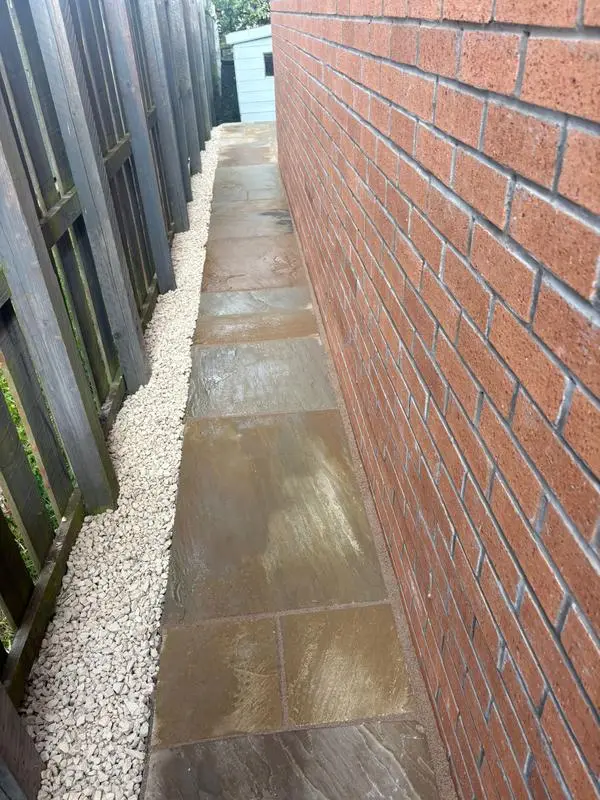
Edinburgh · Midlothian · The Lothians
Natural Stone Patios in Edinburgh & the Lothians
Sandstone, limestone and slate patios with the warmth and character that suit Edinburgh's stone houses.
- TrustATrader 4.97/5
- Checkatrade 9.89/10
- Insured with AXA
- 14+ years in the trade
Not in Edinburgh? We cover your town too:
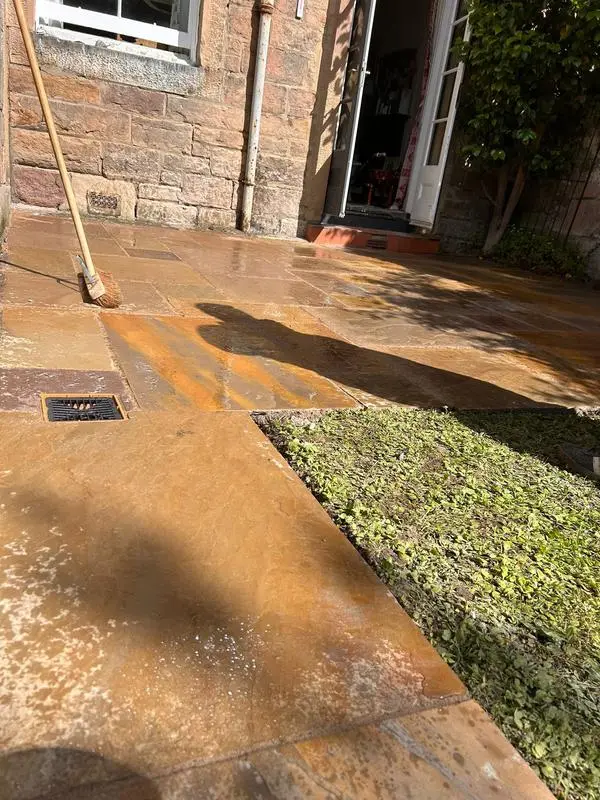
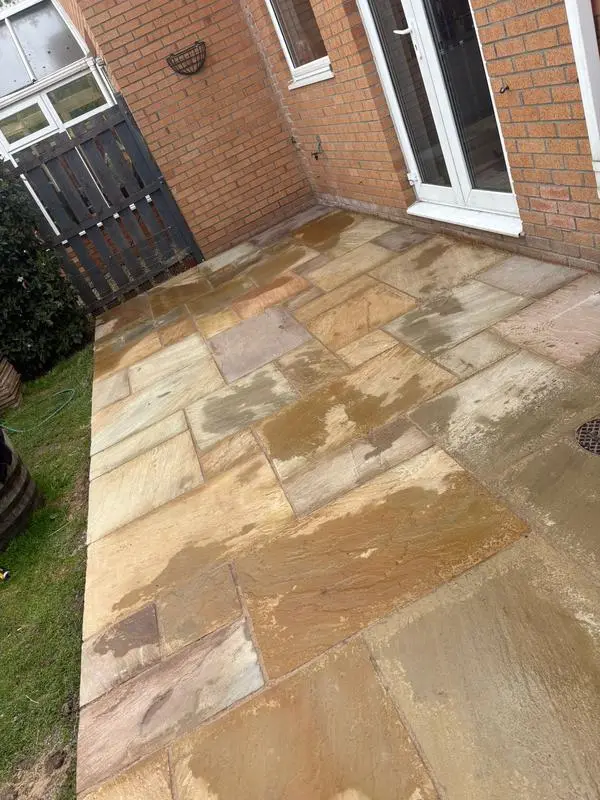
We lay natural stone patios in Edinburgh using sandstone and other natural paving that suits the city's older stone houses as well as modern homes.
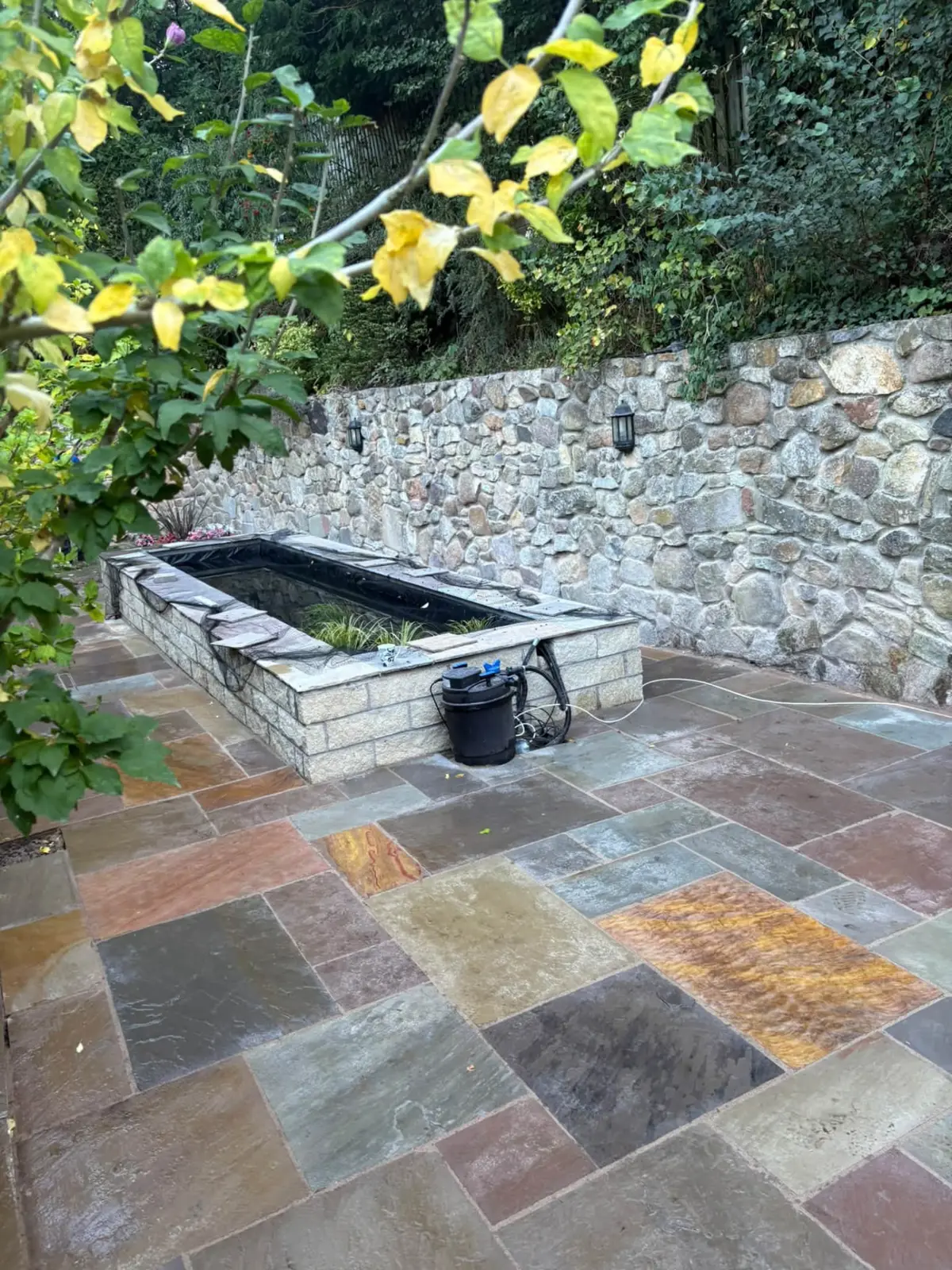
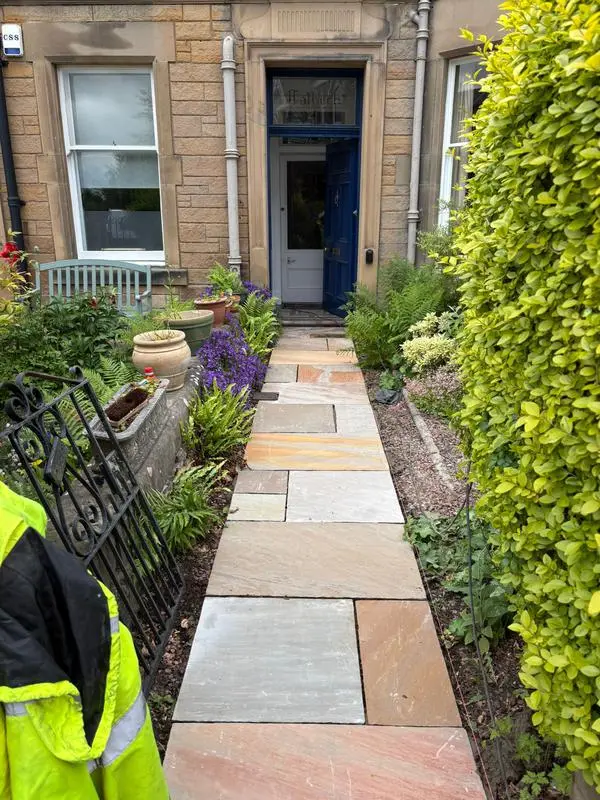
Edinburgh is a stone city. From the New Town to the villas of Morningside, Grange and Trinity, its houses are built from sandstone, and natural stone paving sits beside them more naturally than any man-made material. Every slab is slightly different in colour and texture, which gives a patio a warmth and character that improves as it weathers.
01
Natural stone patios in Edinburgh for period and modern homes
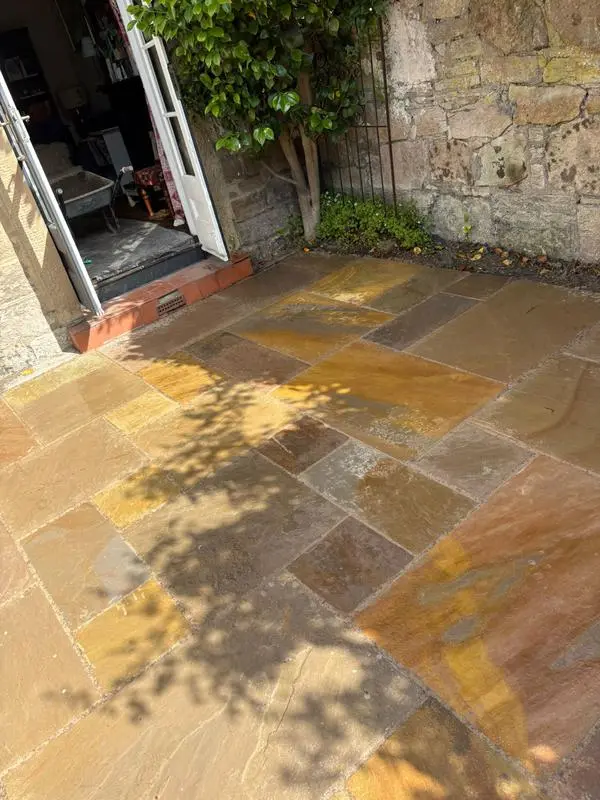
Types of natural stone
| Stone | Look | Good to know |
|---|---|---|
| Sandstone | Buff, grey, golden or mixed tones; riven or sawn | The classic choice; suits traditional houses; benefits from sealing |
| Limestone | Smooth, even blue-grey or black | Sophisticated look; sawn finishes suit modern homes |
| Slate | Dark grey, almost black, with a natural sheen | Dense and hard-wearing; striking with modern architecture |
| Granite | Speckled grey; often used as setts | Very hard; ideal for edging and borders |
Riven or sawn?
Riven stone has a natural, split surface with ridges and texture. It's traditional, gives good grip and hides wear. Sawn stone has a smooth, flat face and crisp edges for a more contemporary look.
Patterns
Natural stone usually comes in packs of mixed sizes, laid in a random pattern that looks natural. Single-size stone can be laid in a coursed or stretcher pattern for a more formal finish.
02
How we lay natural stone
Natural stone varies in thickness, so it's laid differently from porcelain.
- 1
Sub-base
Dug out to firm ground and built up with compacted stone.
- 2
Full mortar bed
Each slab bedded individually on a full bed of mortar, adjusted for its thickness so the surface is level.
- 3
Priming
A slurry primer on the back of each slab improves the bond.
- 4
Falls
A gentle fall away from the house so water runs off.
- 5
Pointing
Joints filled with mortar or a jointing compound that suits the stone.
- 6
Sealing
Optional sealant reduces staining and algae on sandstone.
03
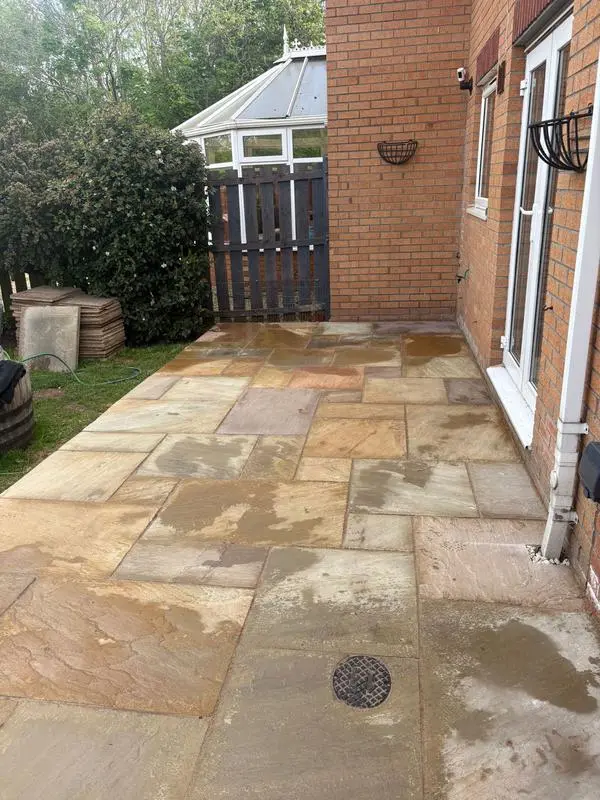
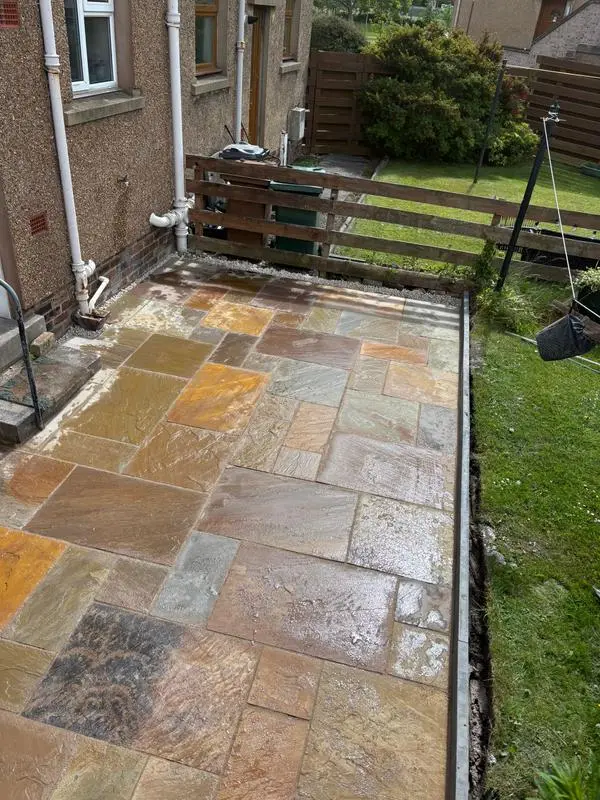
Looking after natural stone
Brush and wash regularly; avoid acid cleaners on sandstone and limestone
Clean off algae in shady areas once or twice a year
Reseal sealed sandstone every few years
Weathering softens colours over time, which most people like
04
Natural stone or porcelain?
Natural stone has more character and suits older properties. Porcelain is more uniform, more stain-resistant and easier to maintain. In shady, damp gardens porcelain usually performs better; around a traditional stone house, sandstone usually looks better. See porcelain patios to compare.
Natural stone patio FAQs
Will sandstone go green?
In shade and damp, yes, it can. Good falls, sealing and an occasional clean keep it under control.
Can you match an existing stone patio?
Often closely. Bring a photo or a spare slab and we'll source the best match.
Is natural stone more expensive than porcelain?
It depends on the stone. Standard sandstone is often similar in price; premium limestone and slate cost more.
06
Get a quote for a natural stone patio
Send a photo of the space and the house. Call or text 07426 792387 or request a free quote. See all patio options.
Free quotes
Get a free, no-obligation quote
Call or text 07426 792387, or send photos through the quote form.